
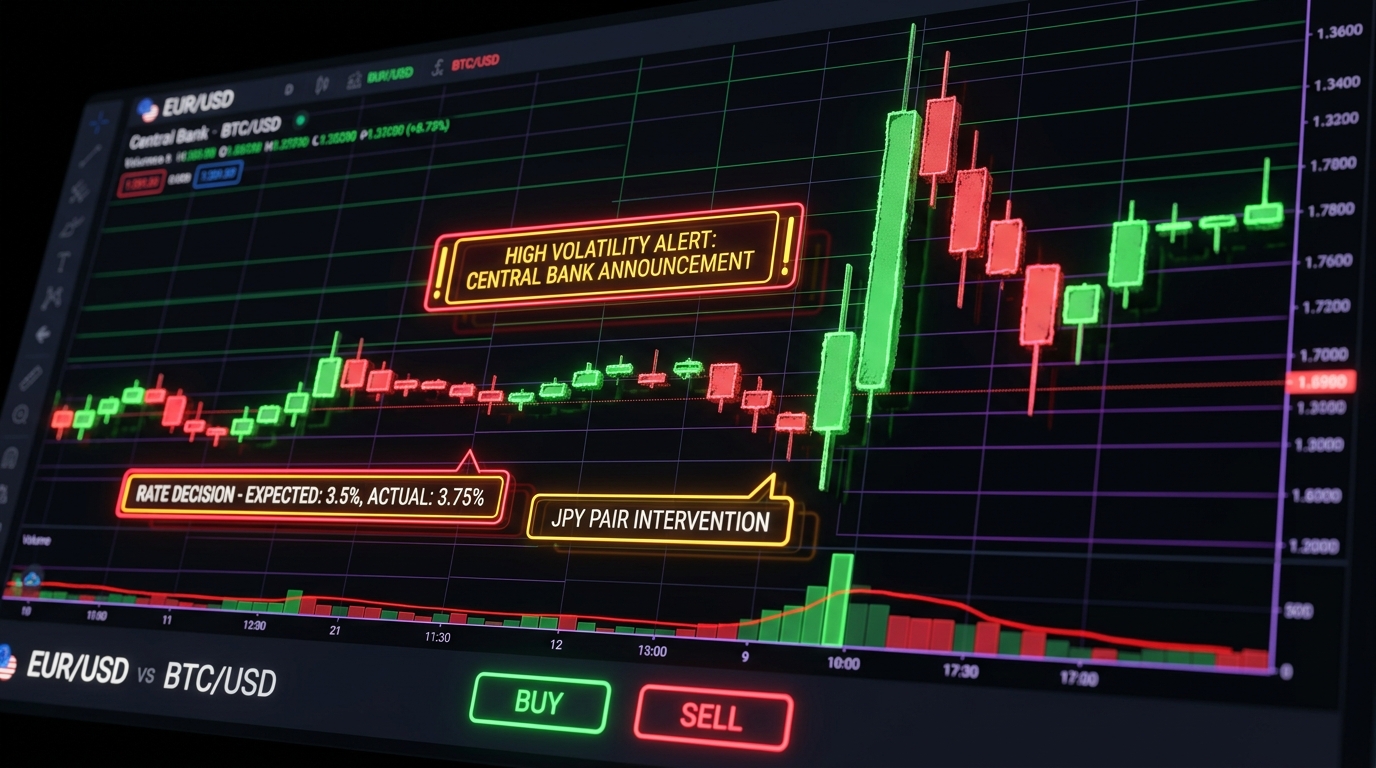
Understanding high-demand market volatility
High-demand market conditions occur during major economic releases — such as US Non-Farm Payrolls (NFP), Federal Reserve FOMC rate decisions, and CPI inflation data. During these windows, institutional order volume surges, causing wide spreads and fast price slippage.
Operational rules for trading news events
- Avoid market execution 15 minutes before and after high-impact economic news releases.
- Widen stop-loss buffers to account for spread expansion during volatile spikes.
- Reduce position sizing by 50% when trading during volatile market sessions.
- Never hold over-leveraged positions through unannounced geopolitical events.
Protecting equity from slippage and gap risks
Slippage occurs when your stop-loss or entry order is filled at a worse price due to rapid order book movements. Using guaranteed stop-loss orders or avoiding low-liquidity market closes protects your capital.
Surviving liquidity shocks with risk rules
Maintain strict daily max drawdown limits. If market volatility triggers your loss limit, stop trading for the day to preserve mental clarity and account balance.
Where Afolks Digital Fits
Afolks Digital provides precision position-sizing tools, automated trade signal broadcasts, and risk management calculators for retail Forex, Stock & Crypto traders. It supports disciplined risk management by calculating exact lot sizes before executing trades live.
Frequently Asked Questions
Should I trade during high-impact news releases like NFP or CPI?
We recommend beginners avoid trading during high-impact news releases due to spread expansion, slippage, and violent whipsaws.
What is slippage in trading?
Slippage is the difference between the expected price of a trade order and the actual price at which the order is executed during rapid market moves.
How do I protect my account during extreme volatility?
Reduce your position size, use wider stop-losses with lower lot size, and adhere strictly to a 1% risk limit per trade.