
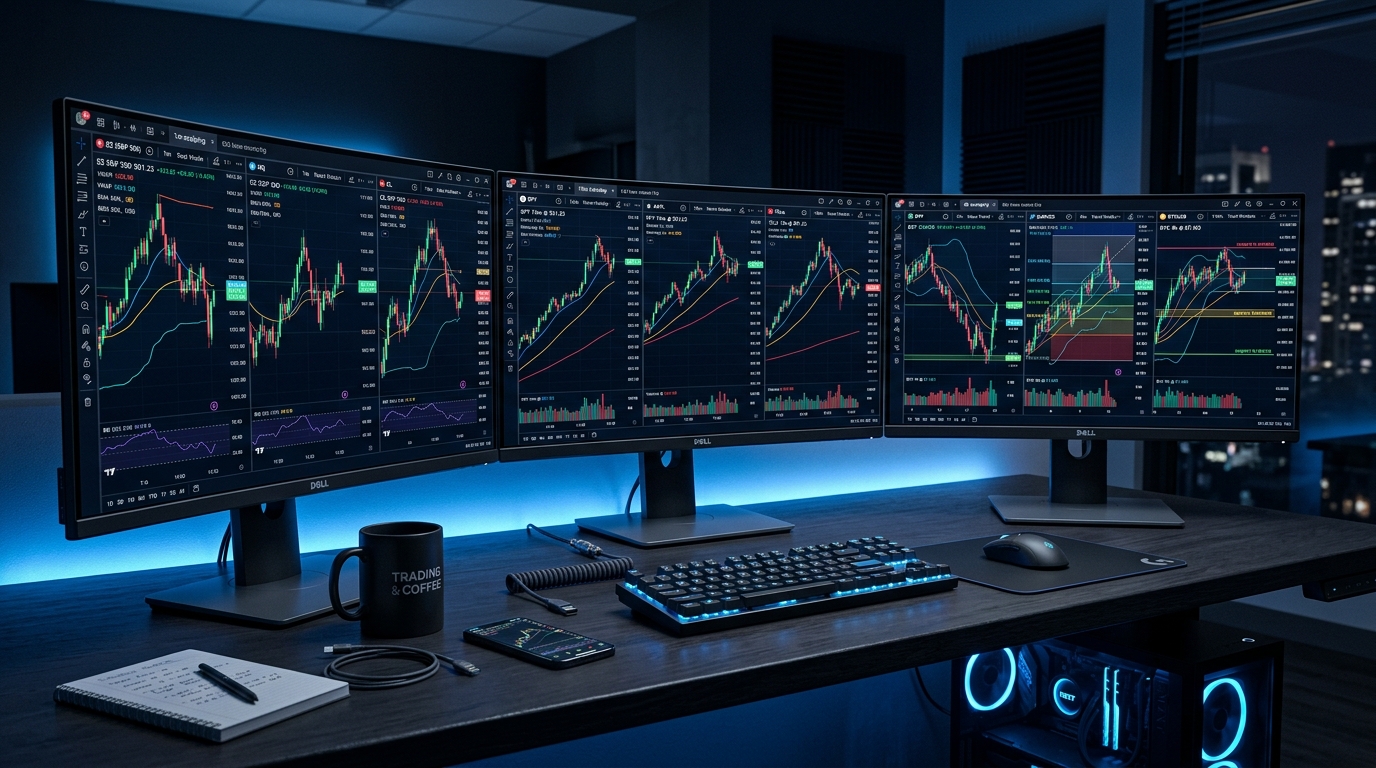
Understand your operational trading profile
Every trader operates with different capital reserves, available screen time, and psychological stress thresholds. Choosing a trading style that conflicts with your daily schedule — such as attempting to scalp while working a full-time job — leads to forced execution and account losses.
Scalping: Rapid execution on short timeframes
Scalpers trade lower timeframes (1-minute to 5-minute charts), holding positions for seconds to minutes. Scalping requires intense focus, fast trade execution, and strict adherence to micro stop-losses. It generates many trade opportunities daily but demands continuous screen monitoring.
Intraday Trading: Capturing session momentum
Day traders open and close positions within a single trading day, avoiding overnight holding risks or swap fees. By focusing on London and New York session opens, intraday traders capitalize on daily volatility while maintaining a balanced lifestyle.
Comparing trading styles by key parameters
- Scalping: 1m–5m timeframes, 5–15 trades per day, seconds to minutes hold time, high screen time requirement.
- Intraday Trading: 15m–1h timeframes, 1–3 trades per day, 1 to 6 hours hold time, moderate screen time requirement.
- Swing Trading: 4h–Daily timeframes, 2–5 trades per week, days to weeks hold time, minimal screen time requirement.
Avoid switching styles after losing trades
One of the most common beginner mistakes is jumping between scalping and swing trading after a few losing trades. Stick to one methodology for at least 50 trades to evaluate your system's edge and expectancy.
Where Afolks Digital Fits
Afolks Digital provides precision position-sizing tools, automated trade signal broadcasts, and risk management calculators for retail Forex, Stock & Crypto traders. It supports disciplined risk management by calculating exact lot sizes before executing trades live.
Frequently Asked Questions
Which trading style is best for beginners?
Intraday trading or swing trading on 1-hour and 4-hour charts is recommended for beginners because lower timeframes (1m-5m) contain market noise and demand split-second decisions.
Do swing traders pay overnight holding fees?
Yes, holding positions overnight in Forex or CFD markets incurs swap fees or financing costs charged by your broker depending on interest rate differentials.
Can I trade successfully while working a full-time job?
Yes! Swing trading on 4-hour and daily charts requires only 15 to 30 minutes of chart analysis per day, making it ideal for full-time professionals.