
Understanding trading vs gambling
Trading is the buying and selling of financial assets (Forex currency pairs, Stocks, Crypto, Commodities) to profit from price fluctuations. Unlike gambling, professional trading relies on statistical edge, risk management, and positive expectancy over time.
Busting common retail trading myths
- Myth: You can turn $100 into $10,000 in a month. Fact: High leverage without risk control causes quick account liquidation.
- Myth: Winning traders win 90% of their trades. Fact: Many profitable professional traders have a 40%–50% win rate with 1:3 risk-to-reward ratios.
- Myth: Trading requires complex math degrees. Fact: Basic risk management math and discipline are all you need.
Setting realistic performance benchmarks
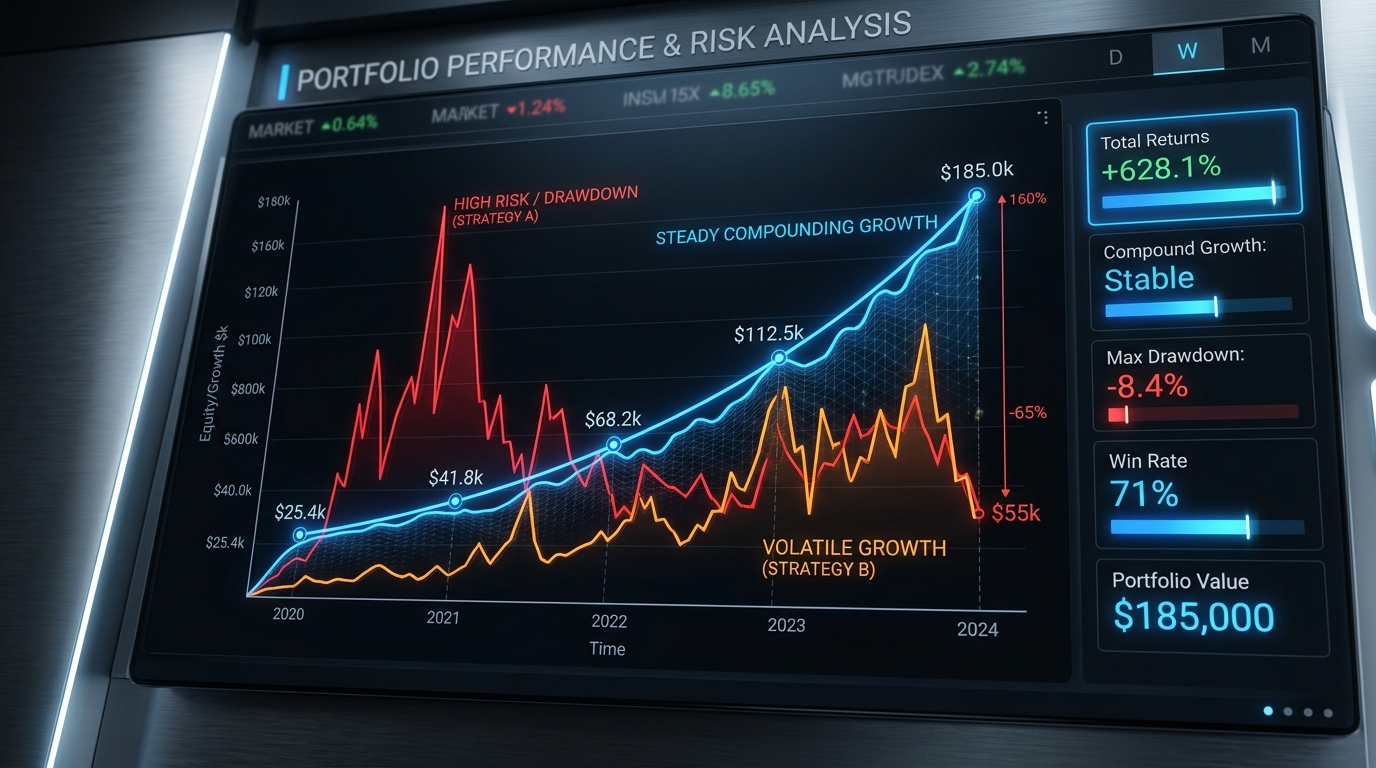
Consistent traders aim for steady risk-adjusted monthly returns (e.g., 3% to 8% per month) rather than trying to double accounts in single trades. Compounding consistent gains builds substantial capital safely.
The 3 pillars of trading longevity
Focus first on capital preservation, second on consistent execution of your strategy, and third on scaling lot sizes as account equity grows.
Where Afolks Digital Fits
Afolks Digital provides precision position-sizing tools, automated trade signal broadcasts, and risk management calculators for retail Forex, Stock & Crypto traders. It supports disciplined risk management by calculating exact lot sizes before executing trades live.
Frequently Asked Questions
How much capital do I need to start trading?
You can start learning with a free demo account. For live trading, starting with $500–$1,000 using micro-lots (0.01) allows safe risk management.
Is trading a reliable full-time income source?
Trading can provide full-time income once you have proven profitability over at least 12 months and manage adequate capital (or prop firm accounts).
What is a good risk-to-reward ratio for beginners?
A minimum risk-to-reward ratio of 1:2 (risking $1 to make $2) ensures long-term profitability even with a 40% win rate.